PAPeninsula Auctions Gallery

Reference catalogue

Every object below is in the public collection of The Metropolitan Museum of Art; none was appraised or is owned by us. For each we list the date and material, and what an appraiser usually examines on this kind of piece, for collectors to learn from.

Every object here is in a public museum collection. Images and data are used under The Metropolitan Museum of Art Open Access (CC0) for study and teaching. We have not appraised these objects, and nothing here is a market valuation.

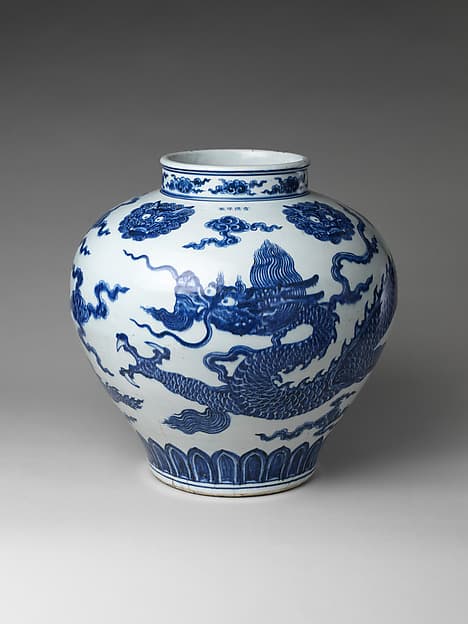
Jar with dragon, Xuande mark and periodCeramics

Jar with dragon, Xuande mark and period

Date
Ming dynasty, Xuande period (1426–35)
Material
Porcelain, cobalt blue under clear glaze
Dimensions
H. 48.3 cm, Diam. 48.3 cm

What to look at

  • Colour: imported cobalt shows dark iron spots where it pools, with soft blurring at the brush edges
  • Body and glaze: a fine orange-peel surface; the exposed foot often fires to a reddish tone
  • Reign mark: compare the calligraphy, layout and cobalt with documented imperial marks of the period

Collection: The Metropolitan Museum of Art · Accession no. 37.191.1 · Museum page
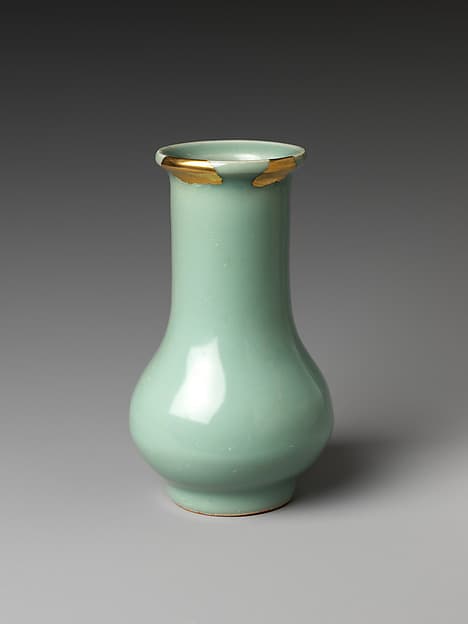
Bottle vase, Longquan wareCeramics

Bottle vase, Longquan ware

Date
Southern Song dynasty, 13th century
Material
Stoneware with celadon glaze; gold lacquer repairs
Dimensions
H. 14.6 cm, Diam. 8.3 cm

What to look at

  • Glaze: the best Southern Song Longquan is a thick, opaque bluish or plum green built up in several coats
  • Foot: exposed body usually fires to a cinnabar red
  • Repairs: this rim was mended with gold lacquer. Any restoration must be disclosed in the report; it affects value

Collection: The Metropolitan Museum of Art · Accession no. 34.113.13 · Museum page

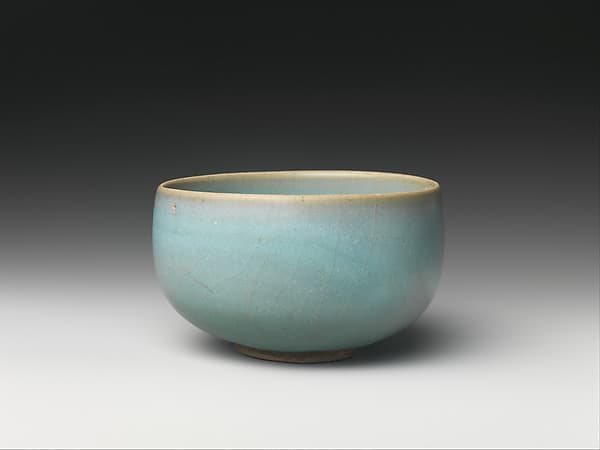
Bowl, Jun wareCeramics

Bowl, Jun ware

Date
Northern Song dynasty, first half of the 12th century
Material
Stoneware with blue glaze
Dimensions
Diam. 10.5 cm

What to look at

  • Glaze: opalescent sky-blue or moon-white, thinning at the rim to show the body
  • Tell-tale marks: "earthworm tracks", formed when the raw glaze cracked on drying and the melt flowed into the cracks in firing; most common on display wares
  • Separate genuine Song Jun from later Yixing and Lujun imitations of the Ming and Qing

Collection: The Metropolitan Museum of Art · Accession no. 20.45 · Museum page

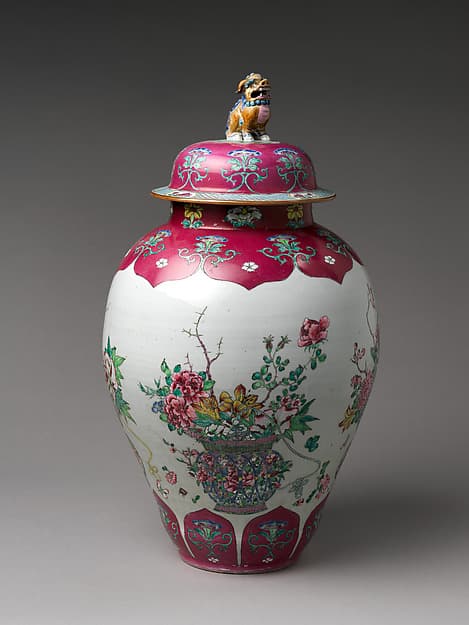
Jar with basket of auspicious flowersCeramics

Jar with basket of auspicious flowers

Date
Qing dynasty, Qianlong period (1736–95)
Material
Porcelain painted with overglaze enamels
Dimensions
H. 61 cm

What to look at

  • Enamels: famille rose colours sit on a white base, giving soft gradations and depth
  • Painting: fine Qianlong wares show dense compositions and confident outlines; imperial, private-kiln and export wares must be judged separately
  • Later copies (late Qing, Republic) tend toward harsh colours and stiff drawing

Collection: The Metropolitan Museum of Art · Accession no. 14.40.189a, b · Museum page

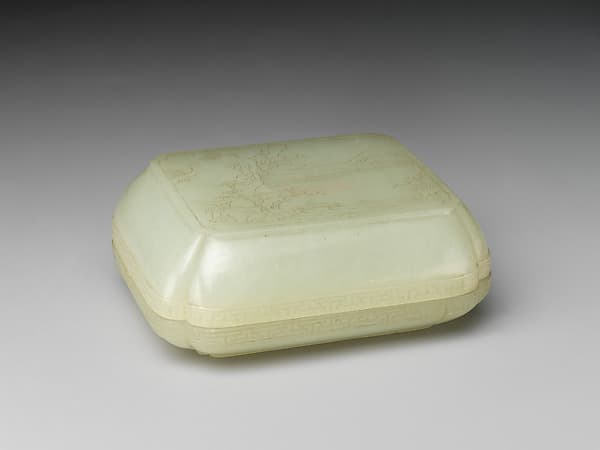
BoxJade

Box

Date
Qing dynasty, 18th century
Material
Jade (nephrite)
Dimensions
H. 2.5 cm, W. 6 cm, L. 5.1 cm

What to look at

  • Material: judge lustre, texture and structure under transmitted light; geographic origin (Hetian or elsewhere) cannot be settled by eye and needs lab testing
  • Workmanship: Qing boxes should have tight-fitting lids and fine polishing
  • Alteration: natural staining penetrates gradually; artificial ageing tends to sit on the surface

Collection: The Metropolitan Museum of Art · Accession no. 04.6.10a, b · Museum page

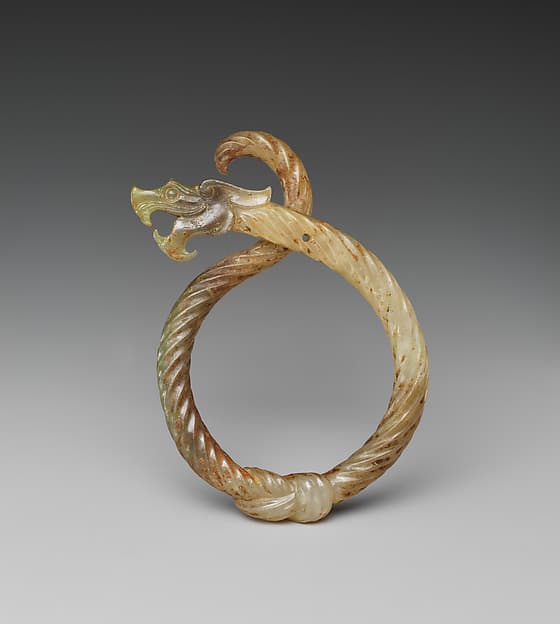
Knotted dragon ringJade

Knotted dragon ring

Date
Eastern Zhou dynasty, 3rd century BCE
Material
Jade (nephrite)
Dimensions
H. 7.9 cm, W. 5.2 cm

What to look at

  • Tool marks: under magnification, look at how incised lines start and stop and at skipped cuts left by the wheel
  • Style: check that the rope twist and dragon head match Warring States conventions
  • Archaic jade is widely copied; weigh tool marks, alteration and provenance together

Collection: The Metropolitan Museum of Art · Accession no. 1985.214.99 · Museum page

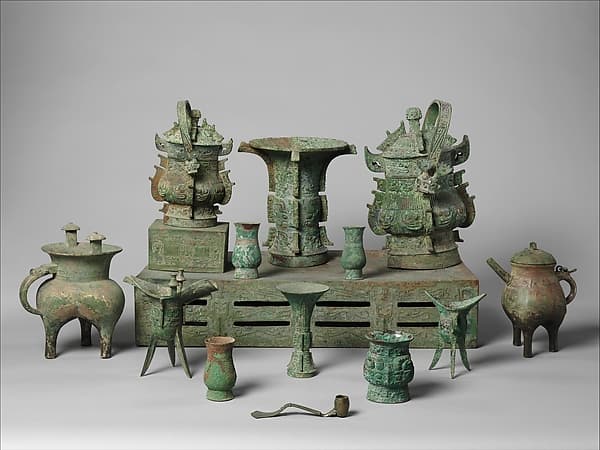
Ritual altar setBronze

Ritual altar set

Date
Shang–Western Zhou dynasty, late 11th century BCE
Material
Bronze
Dimensions
Table: H. 18.1 cm, W. 46.4 cm, D. 89.9 cm

What to look at

  • Patina: natural corrosion builds up in distinct layers; applied or painted patina sits on top
  • Casting: mould seams, spacers and cast inscriptions should match the period technique
  • Provenance: when and how a bronze left its country of origin decides whether it can be sold legally

Collection: The Metropolitan Museum of Art · Accession no. 24.72.1–.14 · Museum page

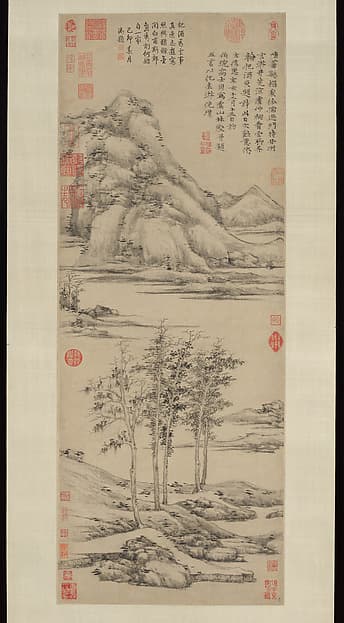
Ni Zan, Woods and Valleys of Mount YuPainting

Ni Zan, Woods and Valleys of Mount Yu

Date
Yuan dynasty, dated 1372
Material
Hanging scroll; ink on paper
Dimensions
Image: 94.6 × 35.9 cm

What to look at

  • Brushwork: Ni Zan is known for "folded-ribbon" texture strokes, sparse trees and dry, pale ink
  • Inscriptions and seals: check the artist's inscription, later colophons, collectors' seals and catalogue records
  • Paper and mounting must fit the date; works attributed to Ni Zan are very often forged

Collection: The Metropolitan Museum of Art · Accession no. 1973.120.8 · Museum page

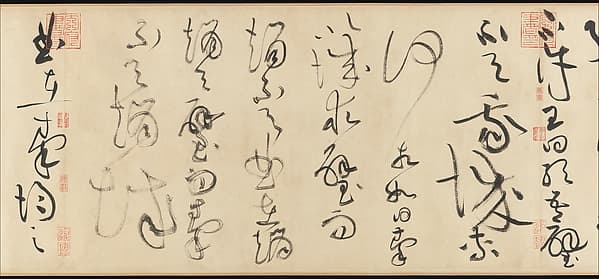
Huang Tingjian, Biographies of Lian Po and Lin XiangruPainting

Huang Tingjian, Biographies of Lian Po and Lin Xiangru

Date
Northern Song dynasty, ca. 1095
Material
Handscroll; ink on paper
Dimensions
Image: 33.7 × 1840.2 cm

What to look at

  • Style: compare stroke movement, character structure and rhythm with secure works
  • History: colophons, seals and catalogue entries trace the chain of ownership
  • Materials: the age of the paper, ink and mounting

Collection: The Metropolitan Museum of Art · Accession no. 1989.363.4 · Museum page

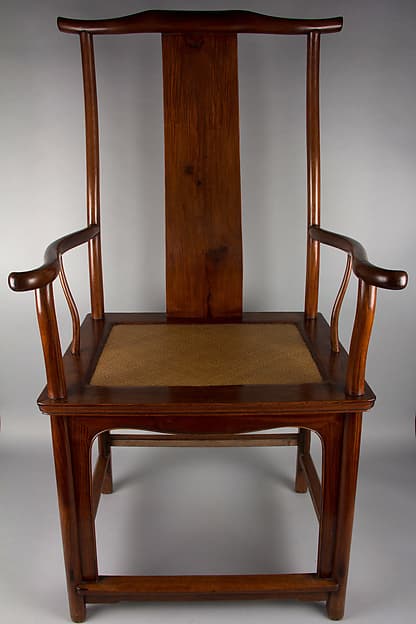
Yokeback armchairFurniture

Yokeback armchair

Date
Late Ming–early Qing dynasty, 17th century
Material
Wood (huanghuali, Dalbergia odorifera)
Dimensions
H. 121.9 cm, W. 58.4 cm, D. 47.6 cm

What to look at

  • Wood: Hainan huanghuali shows "ghost face" figure and a fragrant fresh cut; separate it from Vietnamese and other rosewoods
  • Construction: joinery and wear should make sense together; look for replaced parts
  • Surface: old patina is soft and shows real use; waxed-on ageing looks newer

Collection: The Metropolitan Museum of Art · Accession no. 1997.92 · Museum page

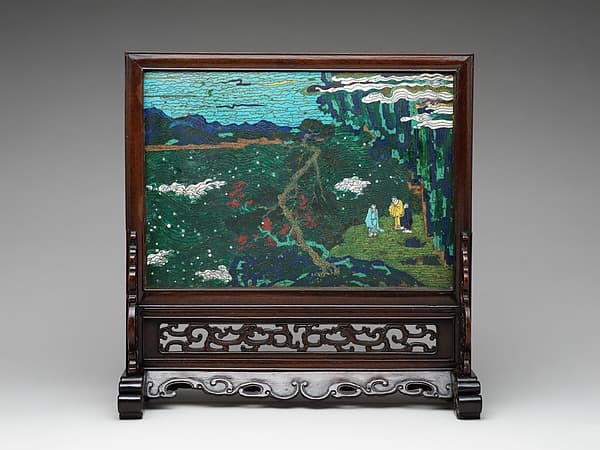
Table screen with landscapeMetalwork

Table screen with landscape

Date
Ming dynasty, second half of the 15th century
Material
Cloisonné enamel on copper alloy; wood frame and stand
Dimensions
H. 49.2 cm, W. 48.6 cm

What to look at

  • Body and wires: Ming copper bodies are heavy and the wirework is less even than in the Qing
  • Enamel: pitting is common and colours are deep
  • Gilding: Qing imitations of Ming work and modern copies tend to have brighter, newer gilding and enamels; modern electroplating looks thin

Collection: The Metropolitan Museum of Art · Accession no. 2022.10a, b · Museum page

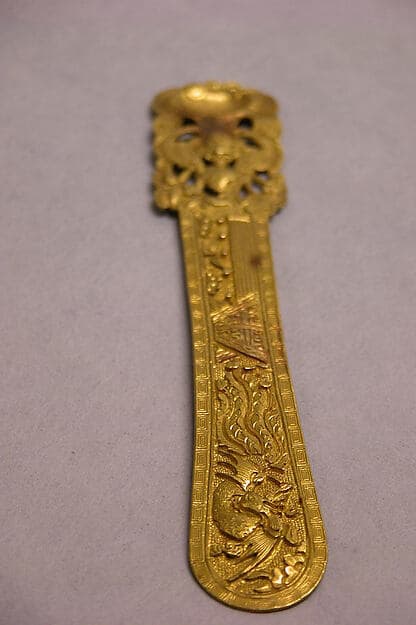
HairpinMetalwork

Hairpin

Date
Ming dynasty (1368–1644)
Material
Gold
Dimensions
L. 10.8 cm

What to look at

  • Fineness: X-ray fluorescence (XRF) tests gold content non-destructively but reads only the surface; surface enrichment or plating can inflate it
  • Technique: repoussé, chasing and filigree should match the period
  • Wear: raised areas should be naturally worn; cast copies lose fine detail

Collection: The Metropolitan Museum of Art · Accession no. 26.202.3 · Museum page